
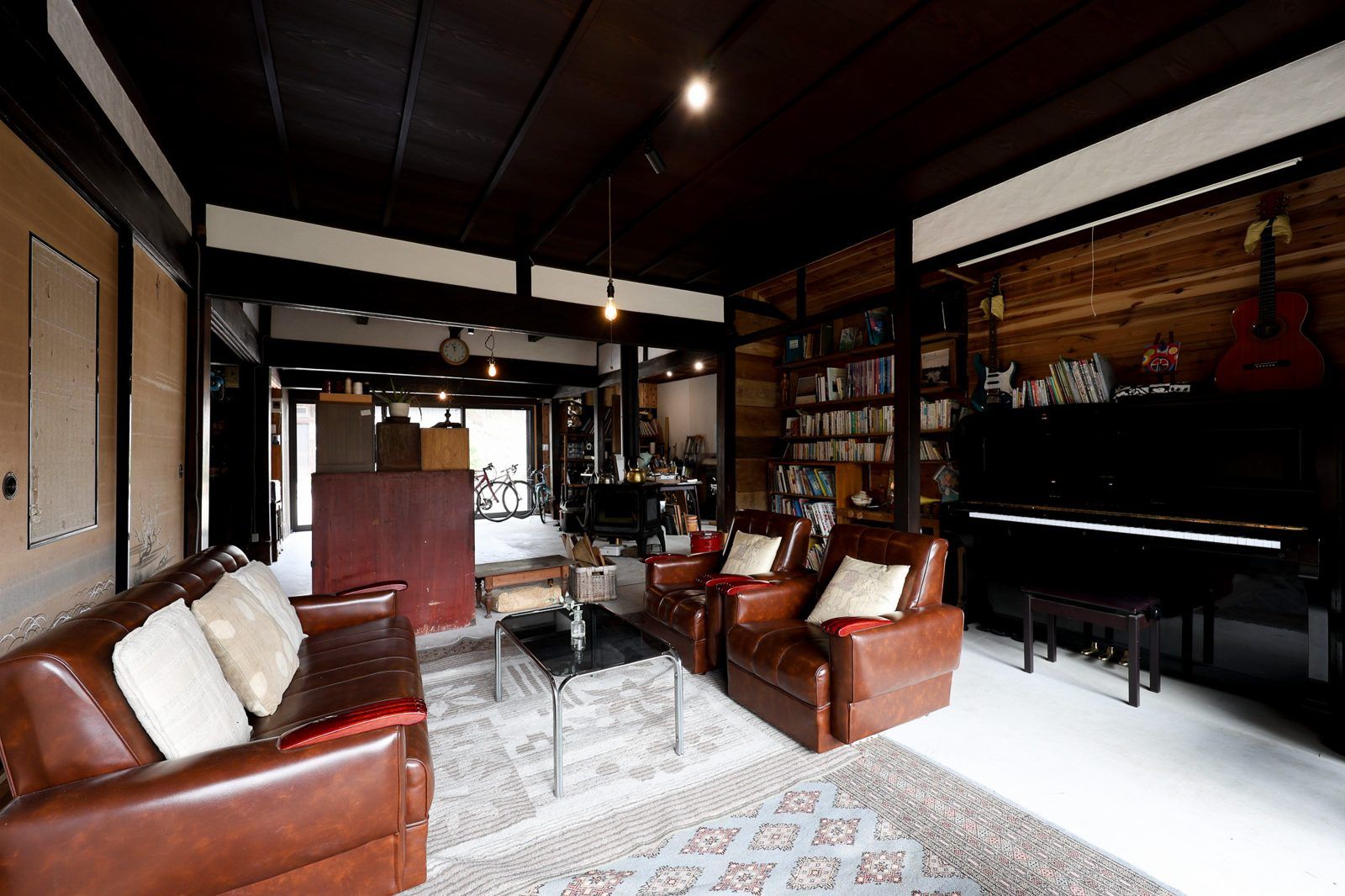
We are a married couple running a shop in a 120-year-old house.
In 2023, we began renovating this house ourselves. Even though we say "ourselves," we didn't do all of it. Some parts we left to professional craftspeople, and some parts we did on our own.
If you are thinking about renovating an old house, I imagine the balance is what you wonder about. If you leave everything to contractors, there is nothing to learn or enjoy, and it costs more. But doing everything yourself isn't realistic either.
What we left to professionals, and what we did ourselves
This is how we divided the work.
What we left to professionals
- Foundation (concrete for the earthen floor): because it is the base that supports the house
- Pillar repair (replacing the parts rotted by termites with new wood): because it is part of the structure
- Roof (the parts rotted by termites): because it is part of the structure and keeps the rain out
- Electricity and water: because they require a license
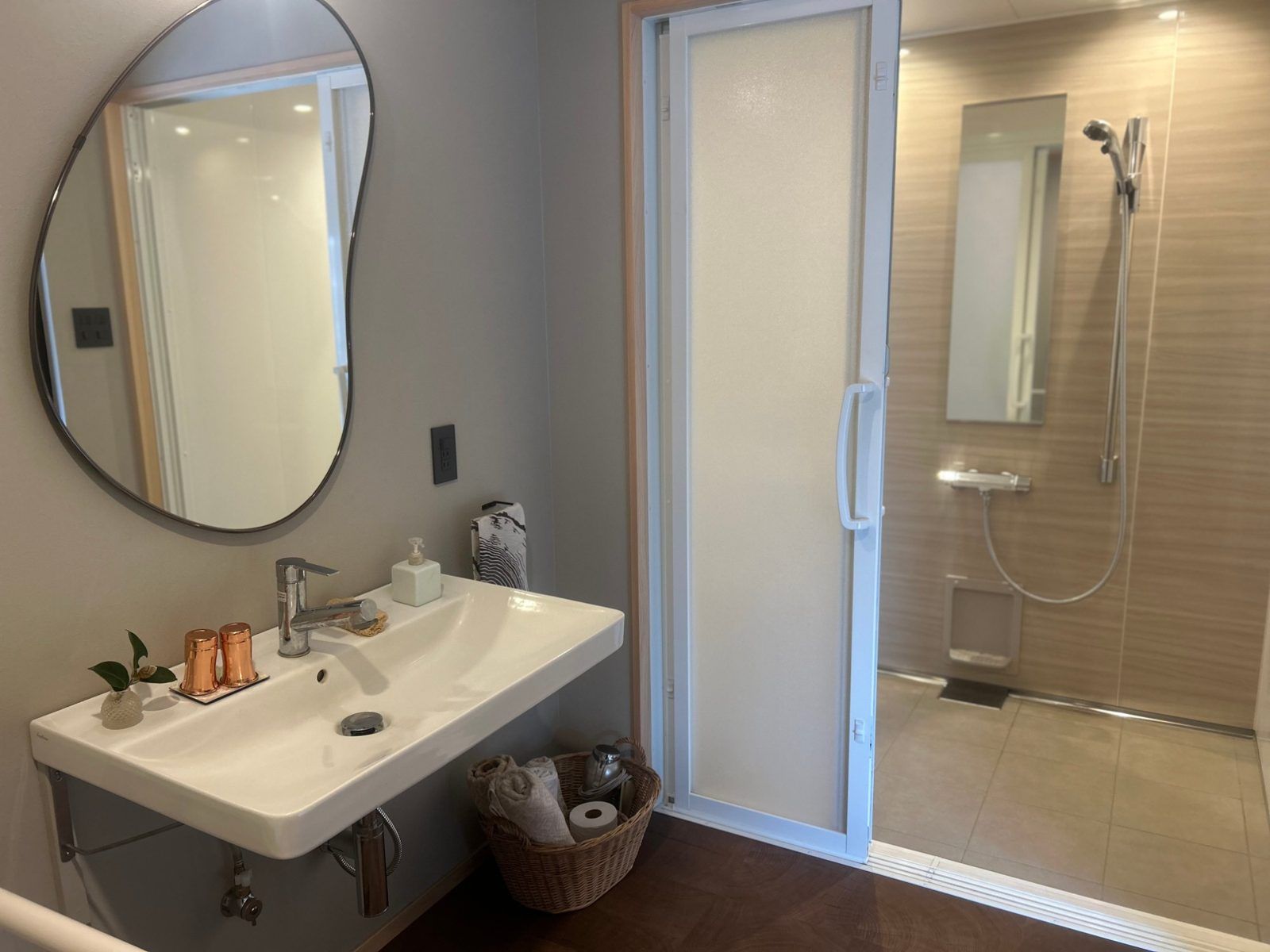
- Guest room interior (walls and floor) and its shower room: because it is where we welcome guests, and it is a prefabricated bath unit
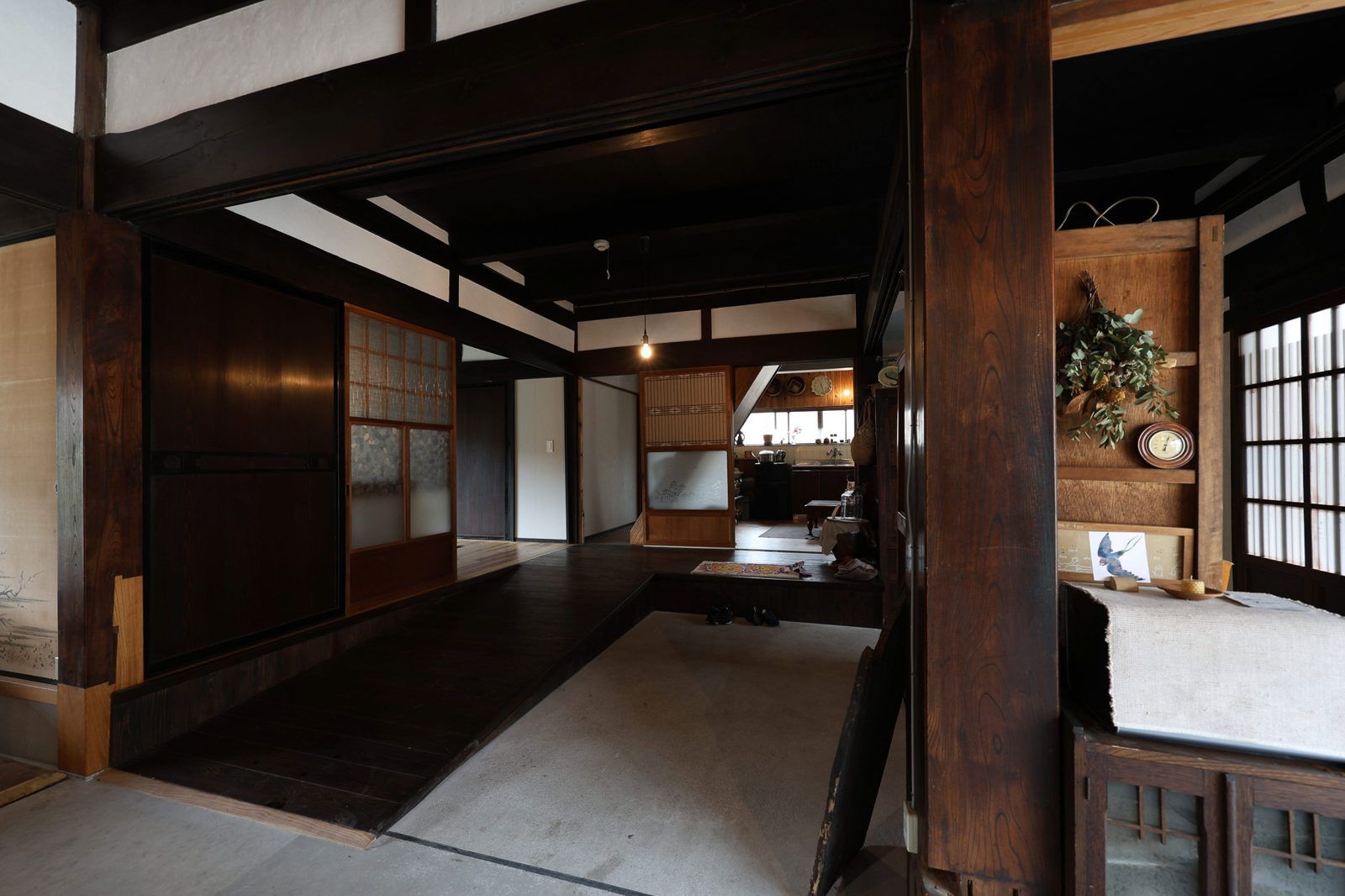
- Wooden ramp at the entrance: because it concerns safety
- Large windows facing outside (building the frames, installing double-glazed windows): because we had no connection with window makers
- Wood stove (chimney work and installation): because it concerns safety
- Ceiling insulation (two rooms other than the guest room): because we couldn't finish it ourselves in time (more on this below)
What we did ourselves
- Demolition (floors, walls, ceilings)
- Cleaning and clearing out what had been left in the house
- Wall finishing (lime plaster and paint)
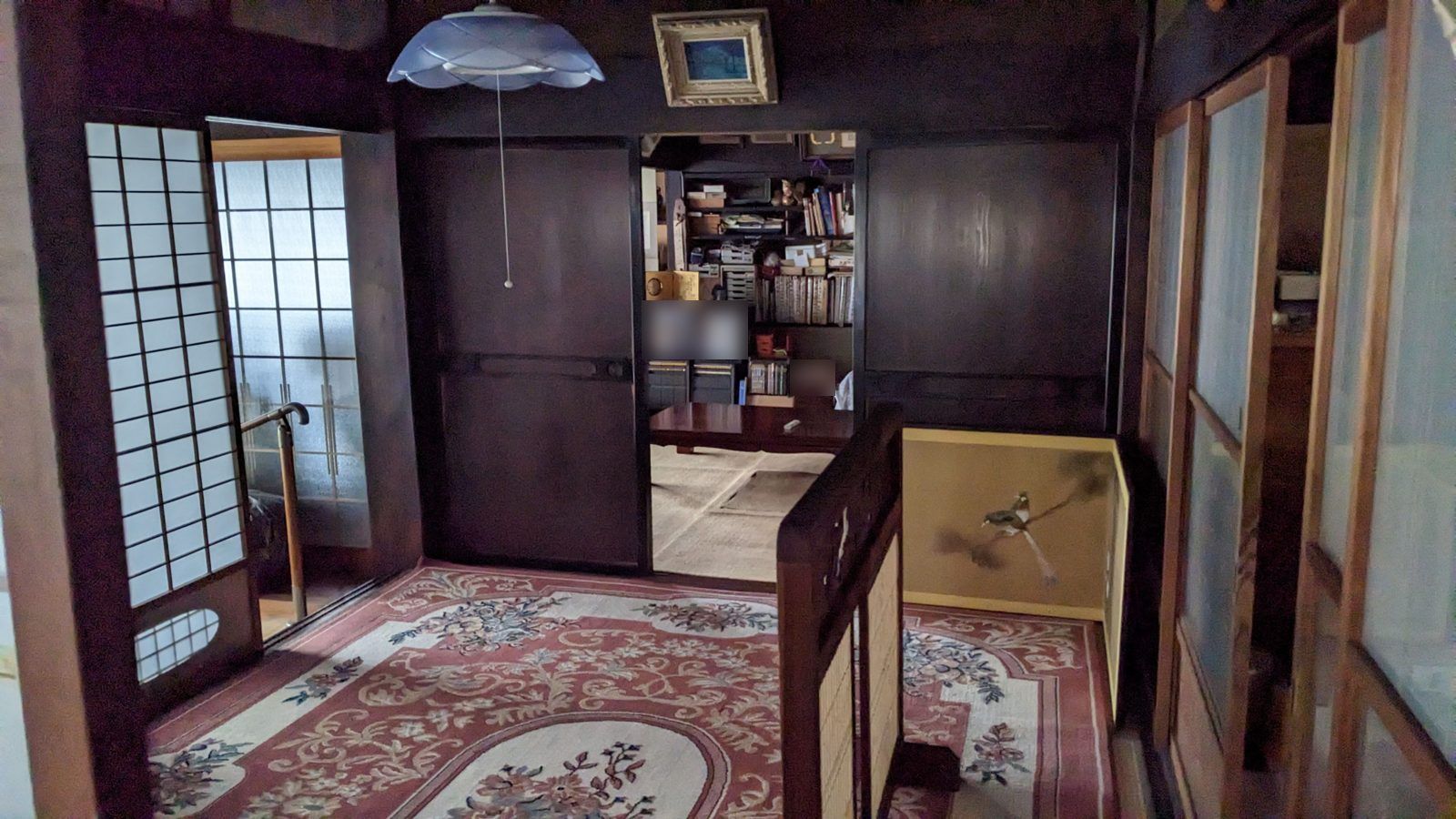
- Interiors other than the guest room (walls, floors, ceilings)
- Guest room ceiling insulation and its finishing
- Insulation and inner windows
- Polishing (pillars, beams, doors and screens)
- Replacing the back door
- Adjusting the sliding doors and screens
What decided the line: "license" and "time"
Broadly, there were two standards.
One was whether a license is required. Work that can't be done without one, like electricity and water, we left to professionals without hesitation.
The other was time. Even when it seemed we could do it ourselves, we left it to professionals if it would take too long or if it wouldn't be done in time for our bookings.
An example of "time": ceiling insulation
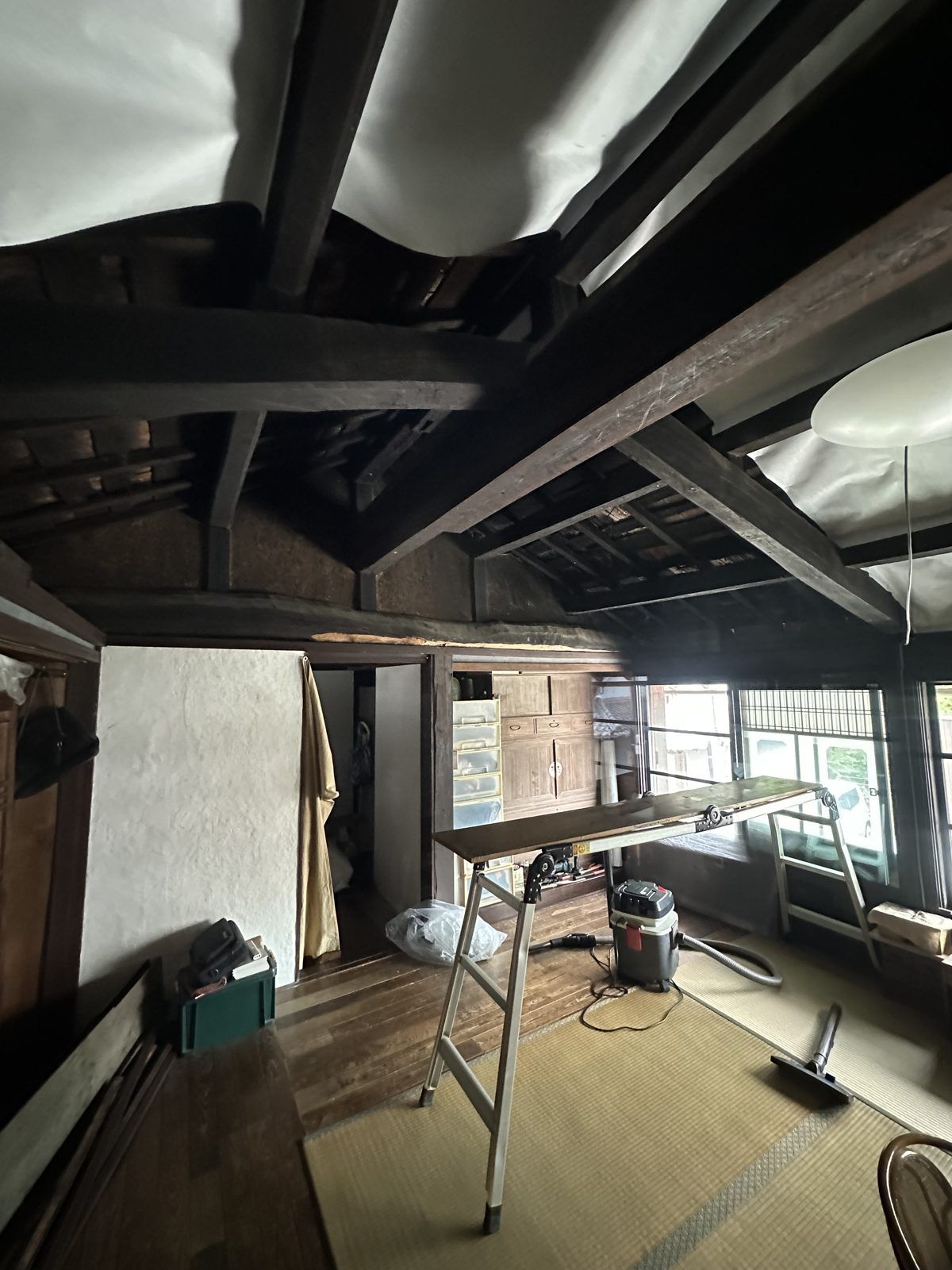
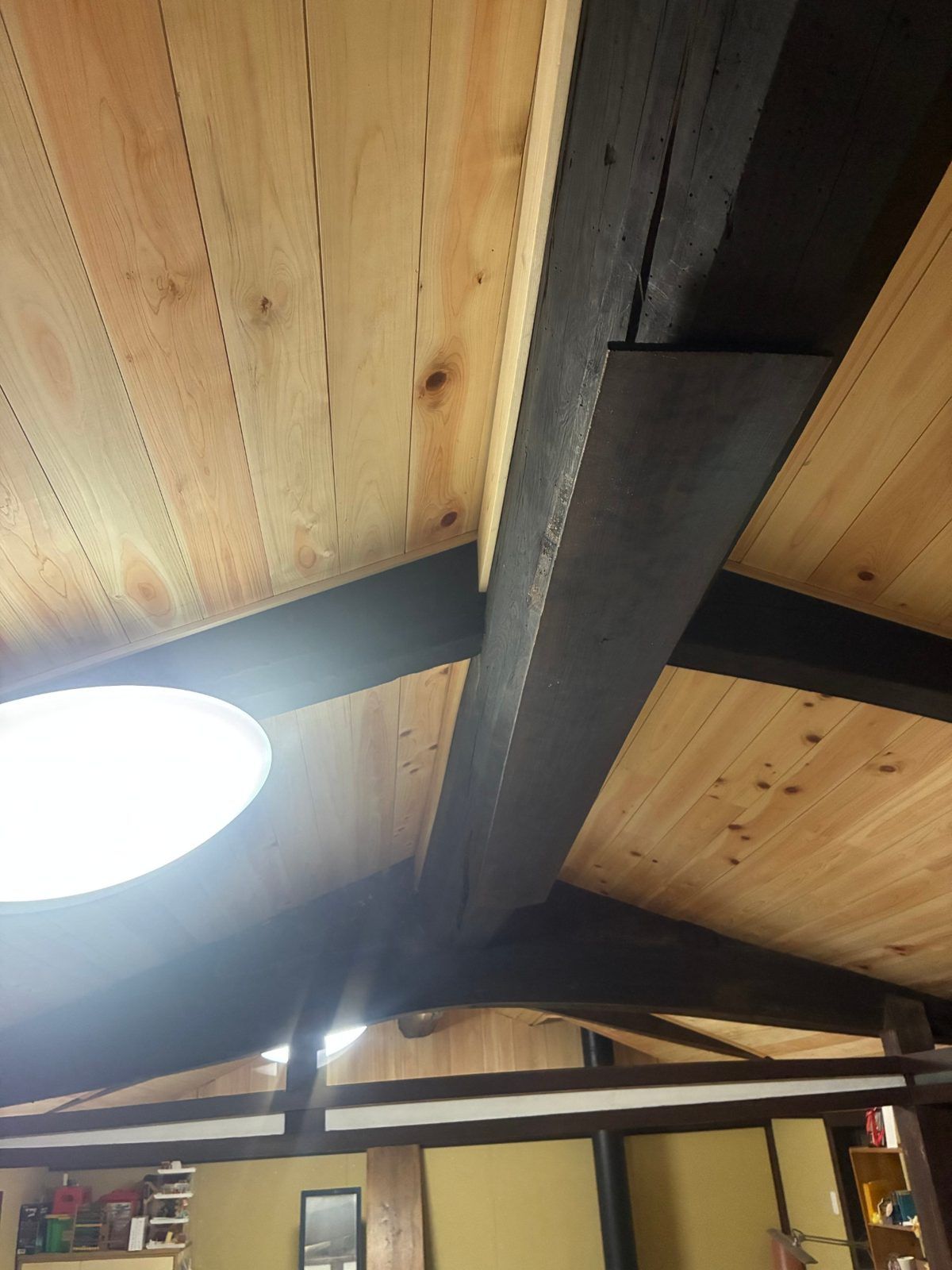
A good example is the ceiling insulation on the first floor, where the guest room is.
We were insulating the house because we wanted it to be comfortable inside. But insulating the guest room alone didn't make it a comfortable house.
The guest room was finished and we started taking guests, but without insulating the other parts, their stay would be hard on them. Just as we were thinking this, the next booking came in.
Other places were also still under renovation, so we judged that we couldn't finish the insulation ourselves before check-in, and we left the ceilings of two rooms to professionals.
In the end, this decision had another good side. Because we could watch the ceiling insulation up close, we had a clear image when we later insulated the second-floor ceiling ourselves.
The value of professionals wasn't only in the finish
Because we were mostly doing it ourselves, being able to see professional technique and planning up close was, I think, a very good thing.
There were many things that books, the internet and videos couldn't tell us but that we could learn by watching in person. For example, how a plasterer uses a trowel includes how to use the whole body when coating a wall. That kind of thing is easier to understand in real life.
And because we had struggled with it ourselves, we could admire the carpenters' skill and finish. It's easy to give orders. But even what seems simple is hard once you actually try it. Having felt that effort through DIY, respect for the carpenters' skill, and gratitude, came naturally.
By the way, I hardly watched any personal DIY videos on YouTube at all. I did use videos made by material companies, and videos by real craftspeople, as reference.
What I kept in mind with the carpenters
There was one thing I kept in mind: not to get in the way of their work.
It's tempting to ask for DIY advice. But doing that makes the carpenters stop what they're doing. It would also show a lack of respect for their knowledge and skill, so I thought it would be rude and avoided it as much as I could.
Instead, I asked, "May I watch, so I can learn from it?" and then watched them work for a while.
When you greet them and bring them something to eat or drink, conversation starts naturally, and sometimes they tell you the knack you wanted to know. But I don't think you should bring things just for that. "Act only for profit, and you will invite much resentment" are words of Confucius.
What was hard about doing it ourselves
Of course, not everything was good.
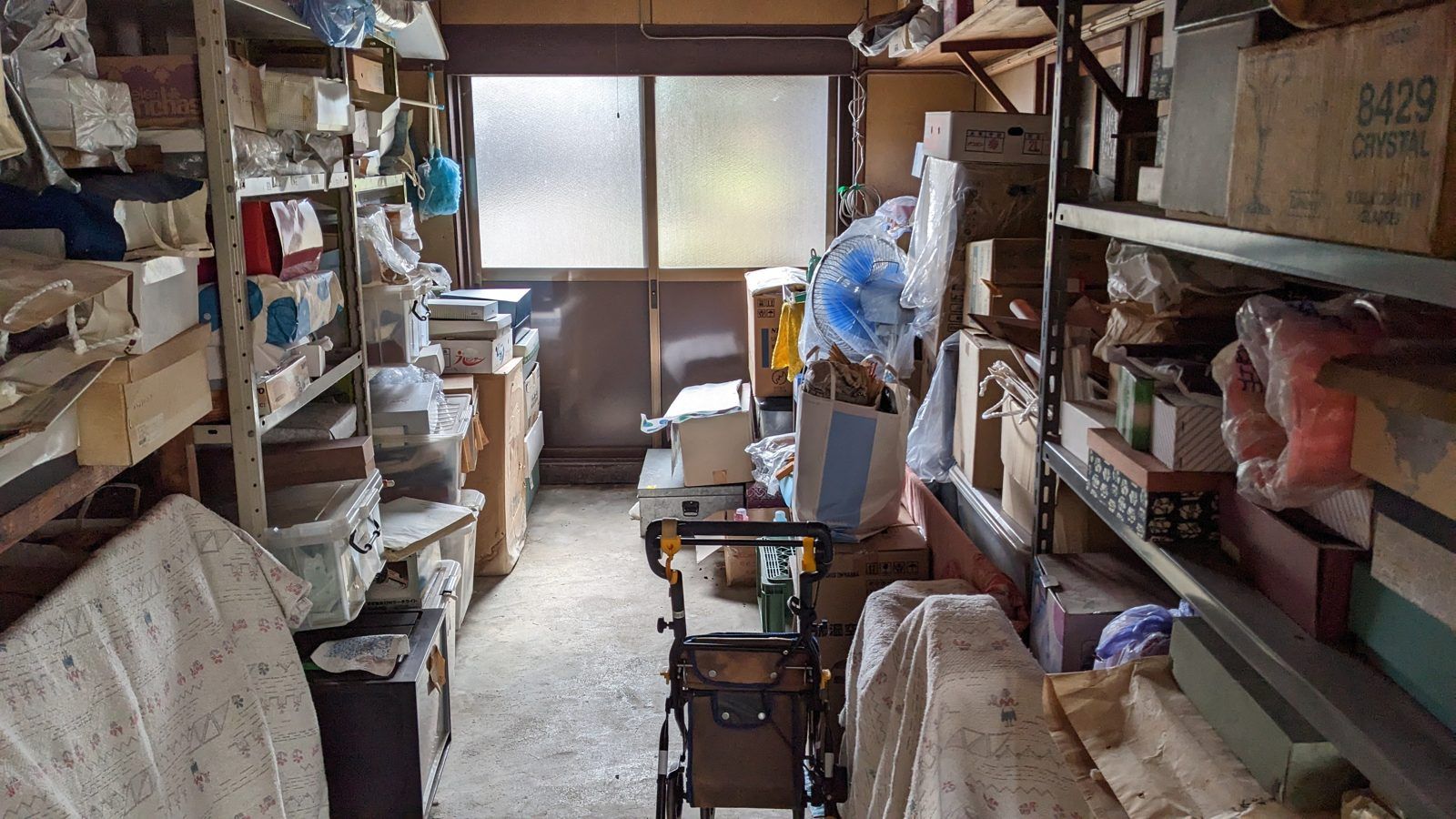
The hardest part was clearing out what had been left in the house, and the demolition. It was the work most likely to wear down our hearts.
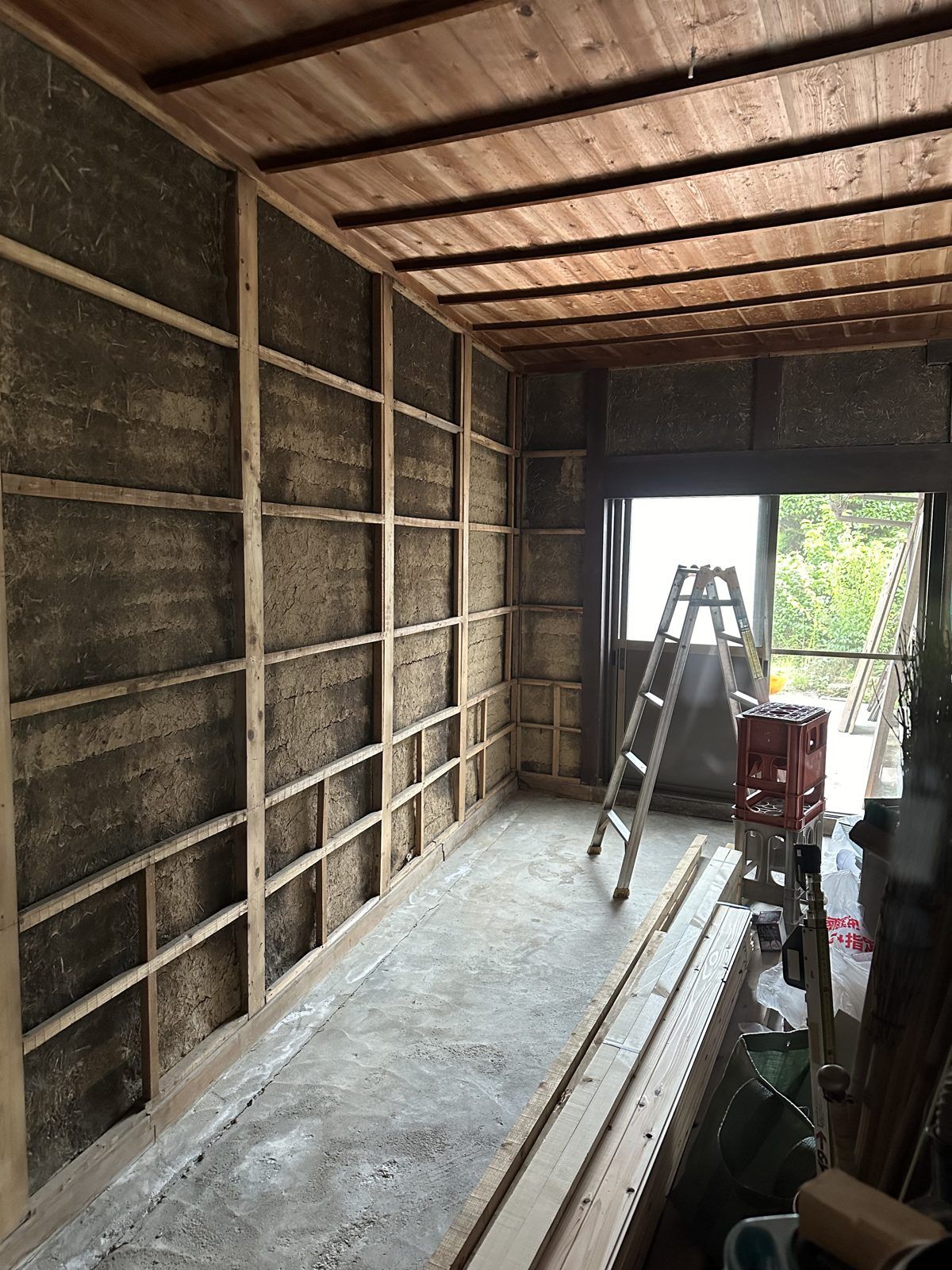
Taking apart the modern building materials was especially so, because they are hard to work with and made to be thrown away. Simply breaking and discarding things that weren't made to be repaired leaves a sense of emptiness.
About failure.
Failure is a signpost to the next success. There are almost no failures you can't recover from.
Of course, some of the work we did ourselves couldn't be redone. The sliding doors and screens that divide the rooms in place of walls are one of a kind and can't be remade. Even so, we adjusted them ourselves. You can't redo it, but you can find a way to make it work. If you bring it together, a failure becomes a story, and a character found nowhere else.
For us, the line between DIY and asking a professional was just the two: whether a license is needed, and the limits of time. The worry of "what if we fail?" wasn't there.
There were times I thought, "Can we do this? How should we do it?" There were many. But I came to trust myself: I'll surely think of something, and even if not now, tomorrow something will come to me.
What was good about doing it ourselves
We came to understand how the house is built
By working on it ourselves, we came to understand how the house is built. So even when something goes a little wrong, we can fix it ourselves. Being able to picture how it works gives us peace of mind in our life now.
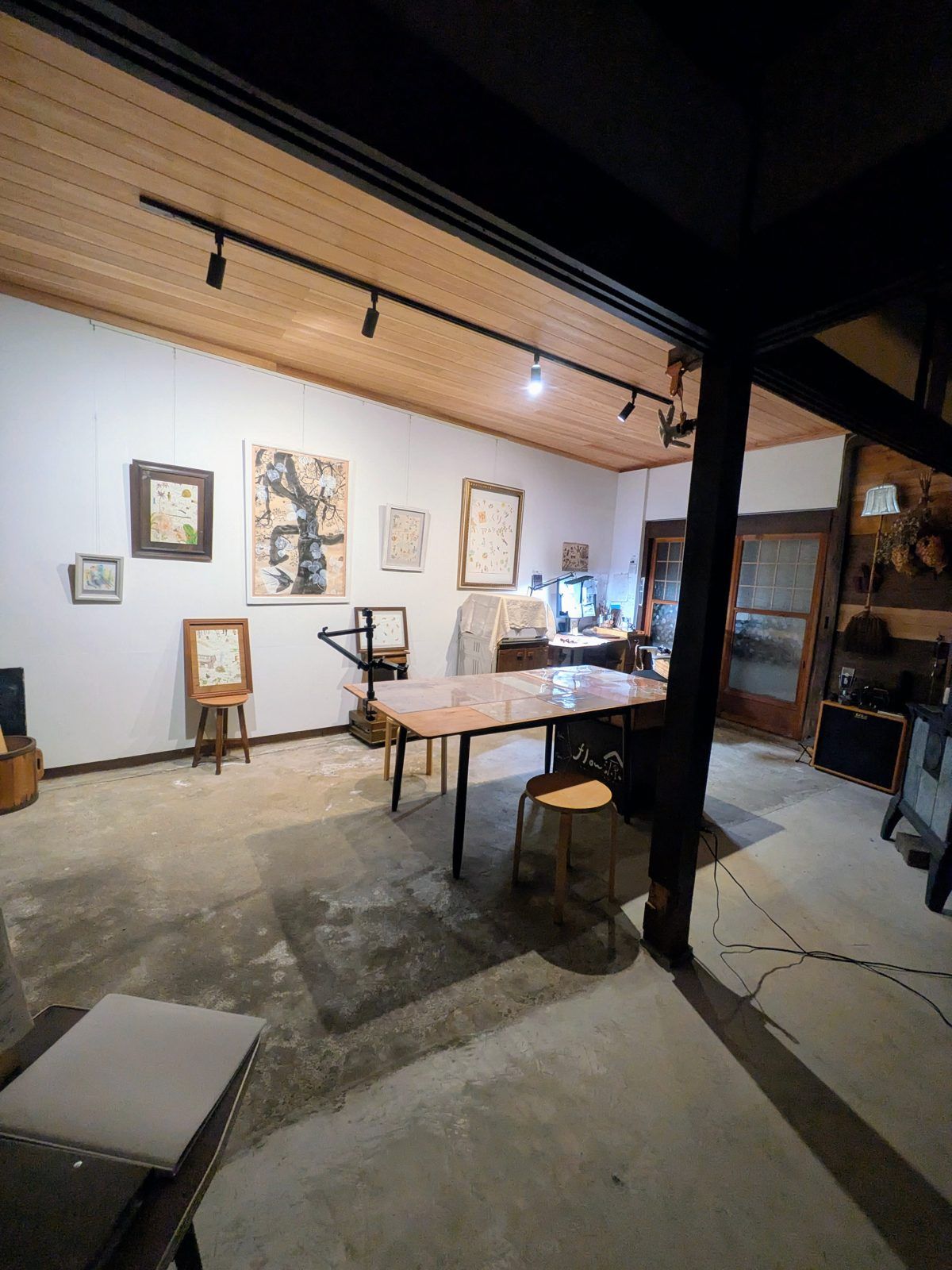
Being told "that must be hard" didn't bother me
Since my twenties, I had wanted to build a house with my own hands. Partly because of that, it didn't bother me at all when people told me "that must be hard" about the renovation.
Renovation isn't building from nothing; it's taking apart a house that already exists and bringing it back using the framework that's already set. What I could learn from it felt close to what I had been looking for.
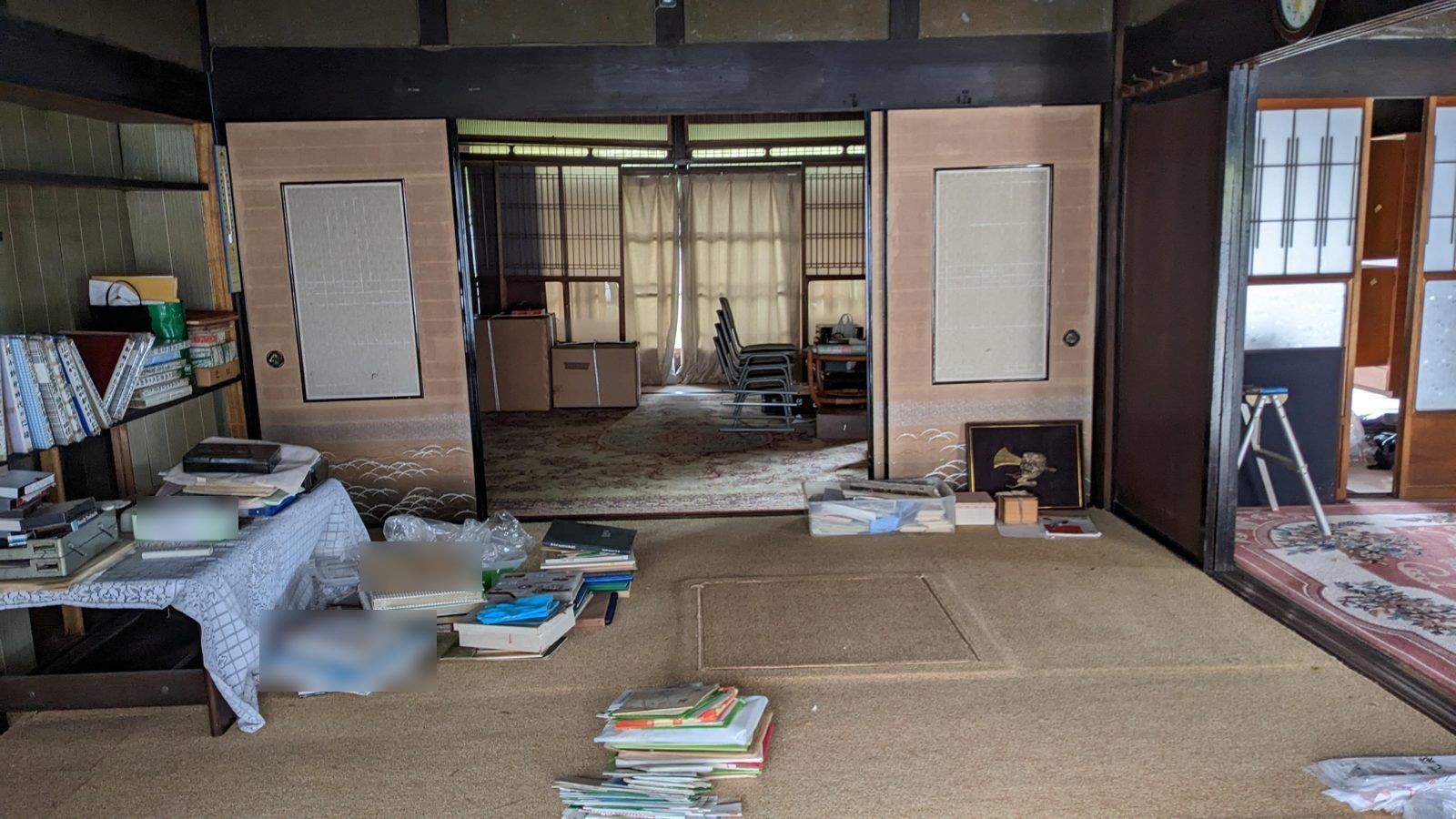
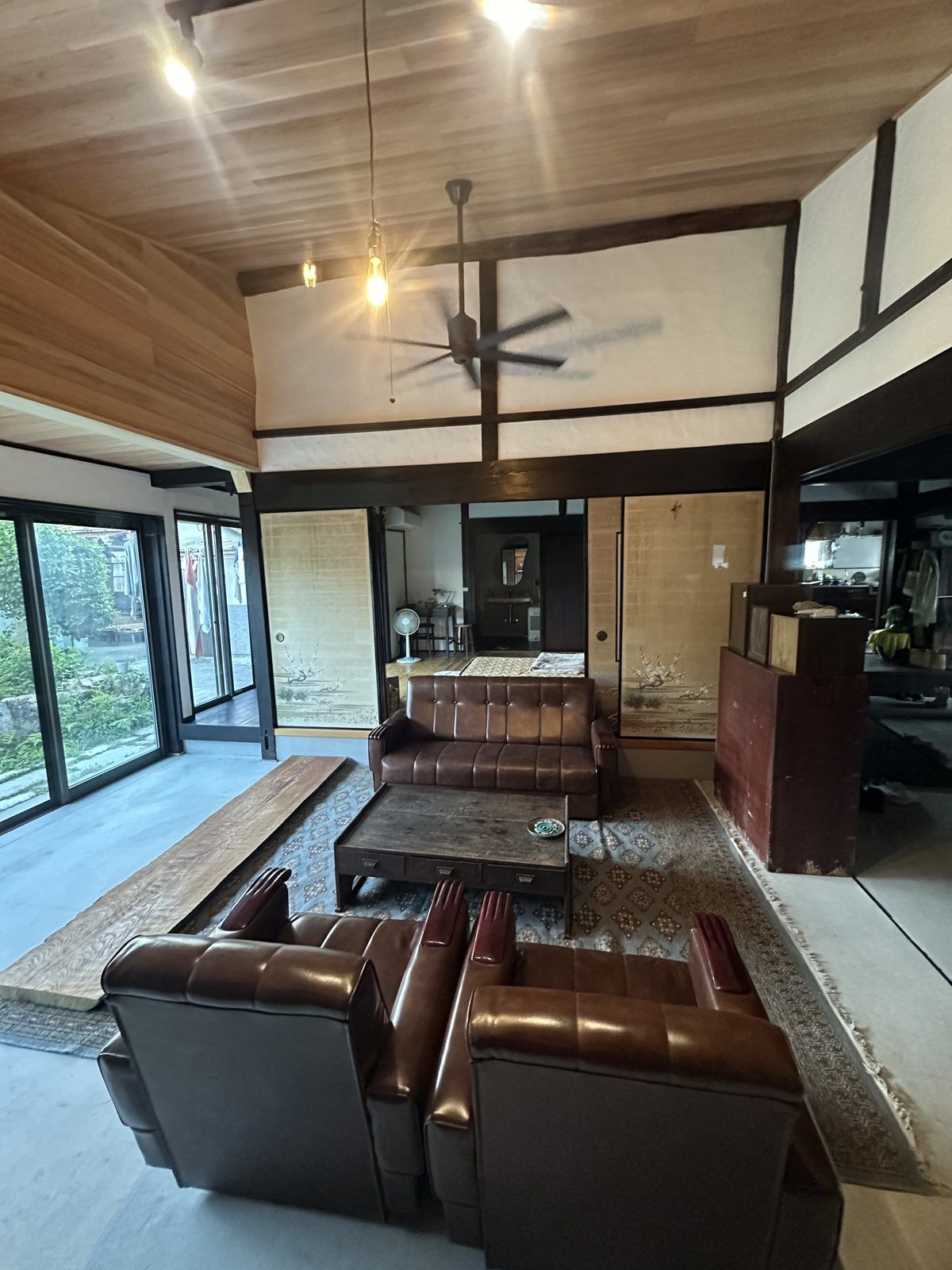
Connections with people stayed in the house
Many people came from overseas to help. Through a platform called HelpX, they came from France, the United States, Australia, the United Kingdom, China, Thailand, Singapore, Germany, Sweden and Switzerland, so we were able to share our cultures in many ways.
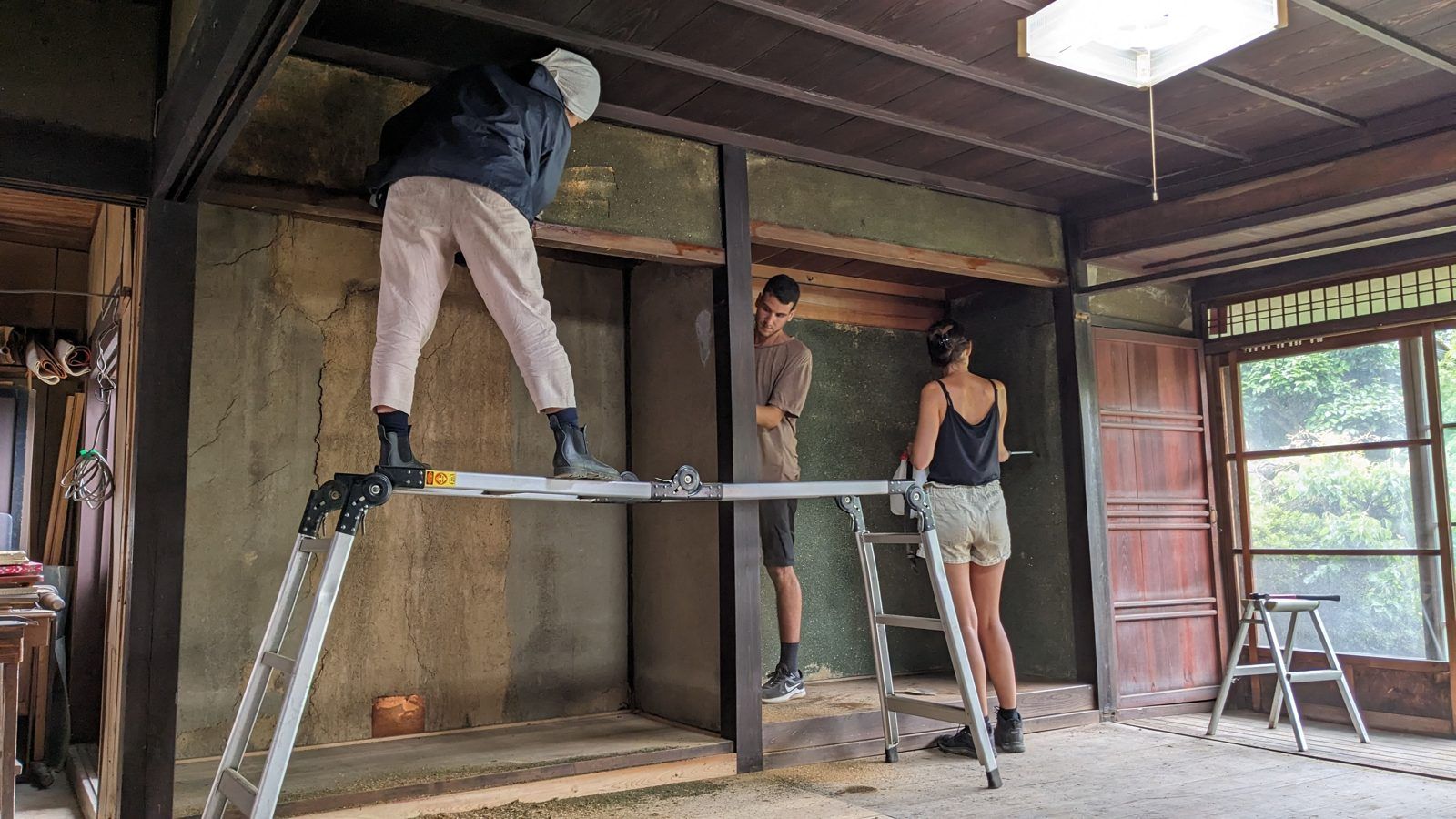
From favorite foods to politics to what matters in life, we talked almost every day, over meals and at other times. I also enjoyed asking why they had come to Japan and what drew them to it, and hearing about Japan as seen from outside.
Because we worked together, one of the joys is being able to remember the people who helped: "This wall was with those people, here with him, that with her." There were also people I didn't get along with. I think that's natural, since we are all living beings. How do you spend a set time with such a person, and enjoy it as best you can? That too was a good experience, and all of it is now a good memory.
You could never get this by leaving it to professionals. Giving instructions takes effort, of course, but it's also practice in communicating. The quality of the work can't match that of professionals. Still, working together and spending time together become irreplaceable memories and stories.
I feel that unbroken connections are always here in the house. I find myself thinking, "I wonder how they are. What are they doing now?" Remembering someone and wishing for their happiness becomes, in the end, our own happiness, and I think that cycle shows in the house itself. I think it's something you can't get by buying things that come packaged.
We learned perseverance and the importance of the basics
A craftsperson once praised us: "You have perseverance." Many people say they want to do something like this, but most of them, it seems, end up giving up and asking the craftspeople to do something about it.
Hearing that makes me realize that, yes, we do have some perseverance. It's no exaggeration to say that this came from farming. Farming trains the ability to bear situations that don't give quick answers (negative capability). I think this ability also helps in raising our children.
Even a single wall is finished in about three coats: a rough coat, a middle coat and a finishing coat. I feel that this can be applied to other kinds of making too.
You don't have to aim for perfection from the start. You don't have to skip steps to reach the finish. Make a big rough frame, bring it mostly into shape, and finally finish it to the form you want. Realizing that was a great gain for me. It isn't zero or one; by taking a step and doing each thing with care, you reach a finish you can be satisfied with.
And the base matters more than the makeup. It's no exaggeration to say the base decides everything. In rice growing too, there is a saying: "The seedling is half the harvest." If you truly understand the basics, you can adapt. You can handle anything.
Being able to learn these things through experience may have been the best part of all.
In closing: the line wasn't only about "can" or "can't"
Looking back, our line between DIY and professionals was "does it need a license" and "time." What we learned by actually doing it is that both what we left to professionals and what we did ourselves had their own, different value.
I'd be glad if this helps those thinking about renovating an old house and wondering, "How much should I do myself?"
How we met this house, and how to look for houses that aren't listed on an akiya bank, I wrote about in an earlier post, "How to Find a House That Isn't on an Akiya Bank."
We also write about moving and having a shop in our newsletter "Kakuuchi," which we write like a letter (in Japanese).
The newsletter "Kakuuchi" is free. Besides moving, having a shop and life in the countryside, it also brings news about our business and events (in Japanese).
Sign up here → https://flow-yamagen.com/en/mail-magazine/