
Introduction
We started looking for a house around September 2022.
In December 2022, we came across the house we live in now. It had been about three months since we began.
This house was not listed on an akiya bank (a municipal listing of vacant houses).
How did we find it? What we did was nothing special.
1. We walked every corner of our village, looking for vacant houses
In the end, our move was a move within the same village.
I was also considering moving to another prefecture or abroad for our children's education, while Yu wanted to keep living in this village. We talked it through and searched by bringing together what each of us had found.
The first thing we did was walk every corner of the village we knew so well, with eyes that were looking for vacant houses. Even among the houses we normally passed without a thought, we began to notice several that seemed to be empty.
2. We approached the neighborhood association office
We went to the neighborhood association office often. This is what we told them:
"Please tell us about any vacant houses there are now. And if a new one comes up, please let us know."
A neighborhood association is not a real estate office. But the people who know the most about the houses in an area are the people who live there.
3. All five houses we viewed came through personal introductions
To gather information, we looked into the city's vacant house programs and checked real estate websites and Sakasama Fudosan, a private service where people who want to live somewhere post their wishes and connect with owners of vacant houses.
But none of the five houses we actually viewed came from the internet or a program. They were introduced to us by acquaintances and by the neighborhood association.
There were many ways to look for information. But the "houses we could actually go and see," the ones that weren't online, came from connections between people.
4. What we checked at the viewings
Before deciding on a house, we checked three main things.
- The condition of the house (could we live in it with some work?)
- The feel of the surroundings (was it a good place for our daily life?)
- The hazard map (how much disaster risk was there?)
The hazard map in particular is something I think you should check first, because this is where you will live for a long time.
5. Not everything went well
With one house, the owner changed their mind partway through.
With another, we couldn't agree on the price, and another didn't move forward because of the family Buddhist altar.
In December 2022, I posted on social media, "We are looking for a place to move to."
Many people reached out right away, and some told us about vacant houses outside our prefecture.
It encouraged us, and I felt saved.
Our children, who were 8 and 4 at the time, looked happy here.
Seeing that, I no longer felt any need to move to another prefecture.
6. We found this house through our community activities
We found the house we live in now because, at the time, we were serving as community revitalization committee members.
The committee's activities included a survey of vacant houses, and that is how we learned this house existed.
We went to see it, then told the neighborhood association office, "We would like to speak with the owner of that vacant house." They put us in touch right away.
When we called afterward, the couple already knew about us.
Looking for a vacant house is a search for property information, but it also turned out to be something you find by being involved in your community.
7. What decided it was the owners themselves
After seeing five houses, what finally decided it was the character of the owners.
We talked about our situations and our hopes, and they showed us around the house.
Afterward they said, "Please talk it over and let us know your answer," but we had already made up our minds.
The couple looked at children with kindness.
We had a real sense that what they truly valued overlapped with what we did.
They were looking for someone who would use this house for the good of the community.
Summary: make connections with the community before looking at properties
A house that isn't on an akiya bank can sometimes be found by changing how you look.
- Walk the village and see the vacant houses and the feel of the area with your own eyes
- Ask the neighborhood association about "vacant houses now" and "vacant houses to come"
- Gather information from programs and websites too, though what led to our viewings was personal introductions
- Getting involved in community activities creates encounters
If you are coming from outside, it may not go the same way.
A big part of why we were put in touch was that we lived in this village and had a relationship with the neighborhood association.
How much people will tell you depends on the size of the area and your relationship with them.
I think what matters is whether people feel, "I'm willing to tell this person."
Regularly going to local events is one way.
It's also important not to try to use people to reach your own goals.
Afterward: from searching to being asked for advice
Now we are on the side of being asked for advice.
The answer changes from person to person, but we answer sincerely about what people want to know.
Also, buying and renting are not the only ways to get a house. It can also be handed over to you.
Unlike the free houses you see online, this is a meeting between people itself.
People come first.
When you find an area you'd like to move to, please ask the people who live there. The information that isn't on an akiya bank is in the community.
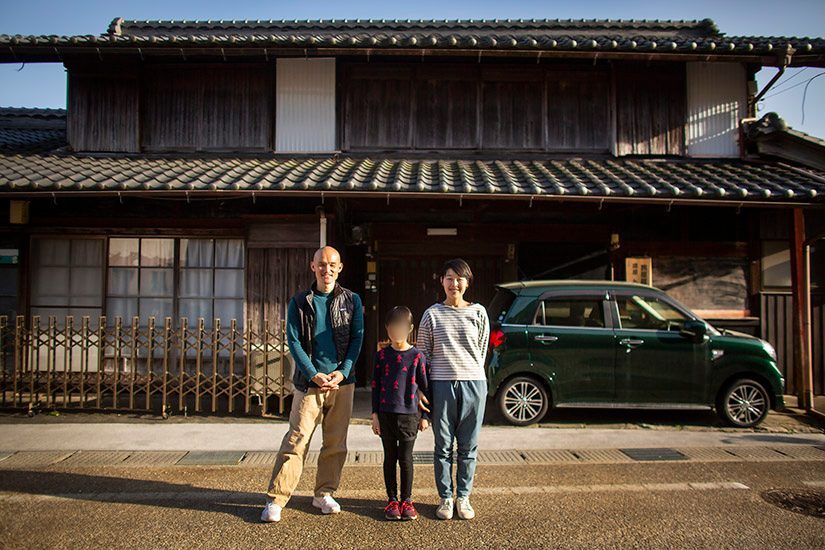
From 2023, we renovated this house ourselves. Today, the two of us run a shop in this 120-year-old house.
We try not to separate our life and our business too much, and to do each thing with care.
We also write about moving and having a shop in our newsletter "Kakuuchi," which we write like a letter (in Japanese).